Advanced Sensing

RGB, MULTYSPECTRAL, HYPERSPECTRAL, LASER, QUANTUM — less waste, more innovation.

TR2 INSPECTION CAPABILITIES

 A complete set of skills for all type of needs 

01

RGB · Multispectral · Hyperspectral

Capture surface appearance and material properties across visible and non-visible wavelengths.
From color, texture and shape inspection to material identification, contamination detection and internal quality analysis—at production speed.

02

Laser · Structured Light · Stereoscopic

Measure shape, volume and dimensional accuracy with high precision.
Ideal for detecting deformations, misalignments, missing components and geometric defects, even on complex or reflective surfaces.

03

Quantum · Hybrid Modalities

Enable next-generation inspection beyond classical vision limits.
Designed for ultra-sensitive detection, low-signal environments and future-ready applications where conventional sensing reaches its limits.

Seeing Beyond the Visible 

RGB, SWIR and hyperspectral sensing for deeper inspection
By combining standard vision with short-wave infrared and hyperspectral sensing, Vision Box captures information that goes far beyond surface appearance. Color, structure and material composition are analyzed simultaneously, enabling reliable detection of defects, contaminants and inconsistencies that are invisible to the human eye.

RGB Vision
High-resolution visible light imaging

RGB vision systems operate in the visible spectrum (≈400–700 nm) and are optimized for high-speed, high-resolution inspection tasks. They provide accurate color reproduction and fine spatial detail, making them suitable for surface inspection and geometric analysis.

Key characteristics
- Spectral range: Visible light (RGB, 400–700 nm)
- Sensor type: Area-scan CMOS, global, rolling shutter
- Resolution: from 2 MP up to 25+ MP
- Frame rate: up to 300 fps (sensor, ROI dependent)
- Pixel size: 2–5 µm typical

Typical capabilities
- Surface defect detection (scratches, dents, cracks)
- Color consistency and appearance control
- Dimensional inspection and alignment
- Label, print and assembly verification

Multispectral SWIR Imaging
Material-sensitive inspection beyond visible light

SWIR (Short-Wave Infrared) multispectral systems operate in the ≈900–1700 nm range, capturing discrete spectral bands selected for material discrimination. This enables inspection based on absorption and reflectance properties rather than appearance alone.

Key characteristics
- Spectral range: SWIR (typically 900–1700 nm)
- Sensor type: InGaAs area-scan or line-scan sensors
- Number of bands: 2–10 discrete spectral channels
- Resolution: 0.3–2 MP (application dependent)
- Frame rate: up to 200 fps (band, exp. dependent)

Typical capabilities
- Material differentiation and classification
- Detection of foreign bodies and contaminants
- Moisture, fat and composition analysis
- Inspection through semi-transparent materials

Hyperspectral Imaging
Spectral analysis for advanced characterization

Hyperspectral systems acquire a full spectral signature for every pixel, enabling precise material identification and quantitative analysis. Data is typically captured using line-scan sensors synchronized with conveyor motion.

Key characteristics
- Spectre: VNIR (400–1000 nm), SWIR (900–2500 nm)
- Sensor type: Line-scan hyperspectral 
- Spectral resolution: 5–10 nm per band
- Number of bands: 100–300+ contiguous channels
- Spatial resolution: line rate and optics
- Line rate: up to several kHz

Typical capabilities
- Chemical and material composition analysis
- Detection of subtle contaminants or defects
- Differentiation of visually identical materials
- Advanced classification using spectral fingerprints

Multimodal Integration

Synchronized sensing, unified processing
All sensing technologies are integrated into a single inspection architecture with synchronized triggering, illumination control and data fusion.
RGB, multispectral and hyperspectral data can be processed independently or combined within a unified AI pipeline.
System-level features
- Hardware-level synchronization
- Modular sensor and illumination configuration
- Real-time processing and edge deployment
- Scalable from single station to multi-stage lines

Unlocking Insights with Laser Structured Light

Laser structured light combined with stereoscopic vision enables precise three-dimensional inspection of complex surfaces in real time. By projecting controlled laser patterns onto the object and capturing them simultaneously from multiple viewpoints, Vision Box reconstructs accurate surface geometry and depth information at production speed.

Quantum Sensing

Quantum sensing is a new R&D line at TR2, currently in the study and feasibility phase, aimed at exploring how quantum-enabled measurement can unlock inspection capabilities beyond conventional vision and spectroscopy. Our research activities focus on high-impact domains such as electronics (ultra-sensitive detection of micro-defects and process variations in advanced assemblies and materials), photonics (precision characterization of optical components, coatings and alignment stability) and space-grade qualification (robust, traceable inspection concepts designed for stringent reliability requirements and challenging, low-signal conditions). By investigating quantum-enhanced detection principles and hybrid architectures that can complement RGB, SWIR and 3D sensing, we are evaluating performance gains, calibration stability and integration pathways needed to translate scientific potential into industrially deployable inspection modules.
Interested in collaborating with us in Quantum and Photonic? 

Ensure Compliance

Automated Quality Assurance

Guaranteed Compliance

Streamline your production with real-time, automated inspection systems that guarantee product compliance and reduce reliance on manual checks. Capture and document quality data for every item with precision, ensuring consistent standards across your entire output. 

Read More
Optimize

Leverage Quality Insights

Enhance Performance

By automating and digitalizing inspections, manufacturers unlock valuable data on production trends and performance. Actionable analytics and process feedback enable continuous optimization, helping to fine-tune operations and drive higher efficiency. 

Read More
Reduce Costs

Minimize Waste, Maximize Savings

Cost-Efficient Quality Control

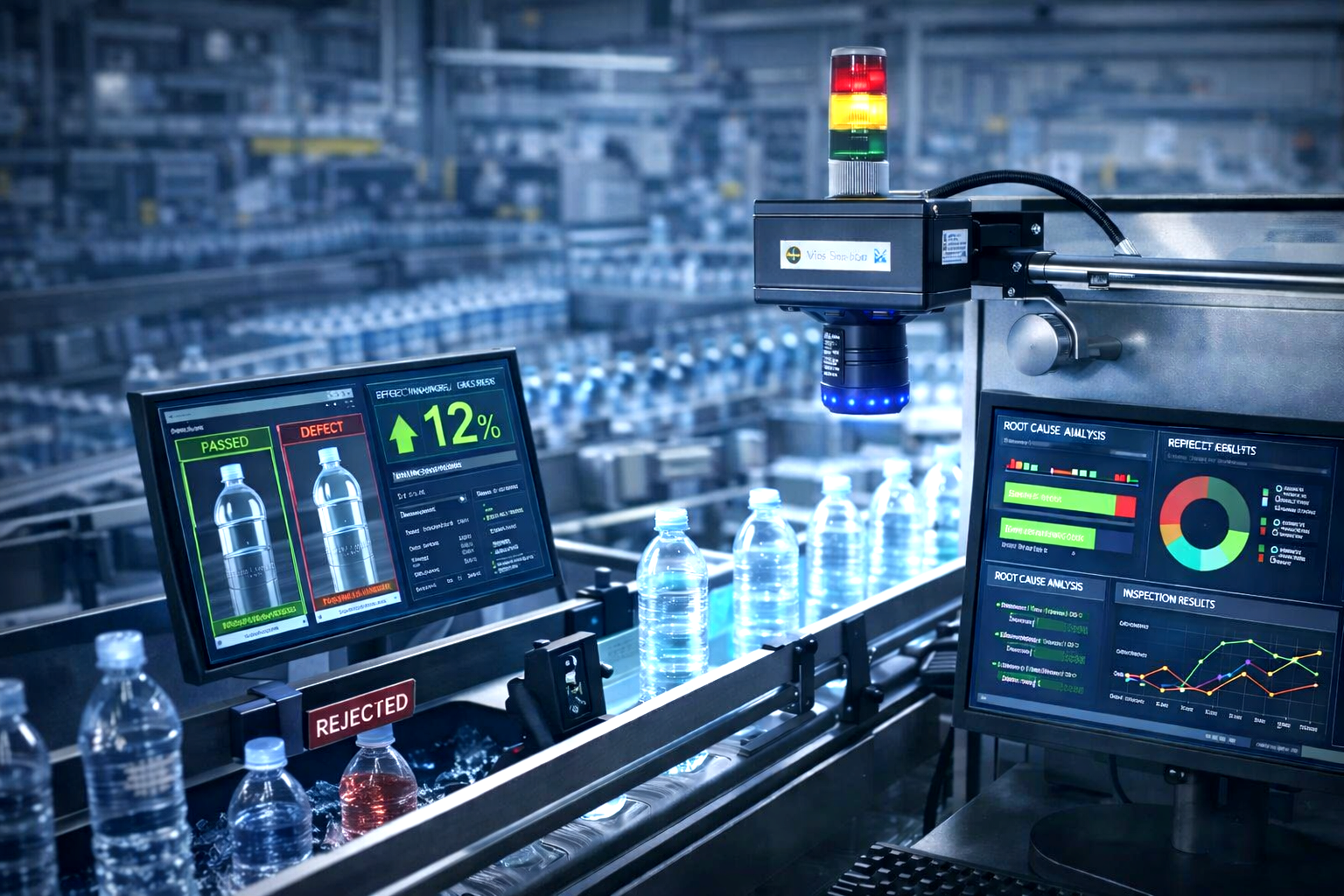
Implementing accurate inline inspection reduces the risk of defects reaching the market, cutting costs tied to recalls and rework. Early issue detection and data-driven root cause analysis help streamline operations, reduce material waste and lower overall QC expenditure. 

Read More

Get now
the advantages of TR2 Vision Box Systems

About
Collaborations
Disclaimers